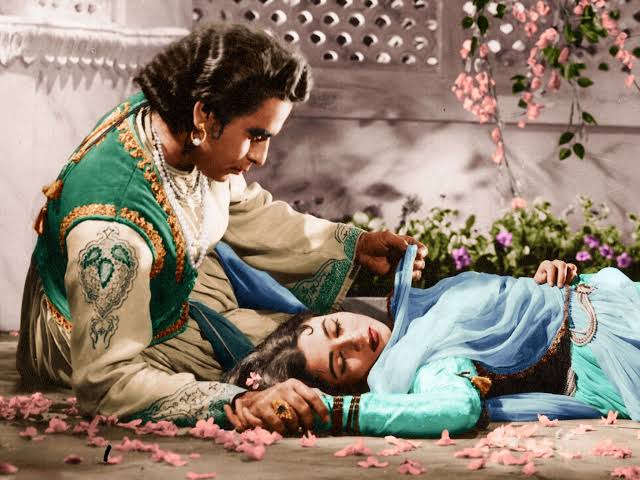
In the film Mughal-e-Azam, Emperor Akbar entombs Anarkali, the woman his son loves. Set to inherit the throne of Hindustan, the prince must not fall in love with a mere courtesan, so beneath his social standing. The romance must end, one way or another. And so she is ordered to be entombed alive inside the palace walls. This scene played in my mind today when a woman covered my entire face with a sheet of gauze before applying cement-like clay on it, covering even my eyes, my lips, and so it felt like drowning, like death. It was quite surreal, feeling this heaviness weigh down my face, layer by layer by layer. All blackness, then a tiny spot of blue, the poetry of Anne Carson, the men that should be kissed, the music of Erik Satie, the women and their books, a forest of text, a field made of manuscripts, then blankness, until I feel like I cannot breathe anymore, that this, indeed, is the end. And so this is how I find out that a Korean glass skin facial recreates well the experience of being the forbidden lover of a prince.
What do Mughal-e-Azam and Korean facials have in common?