
One could lie down on the grass at night for hours looking at stars. Though one quickly discovers that apart from stars, there are also planets, meteors, flying planes, the moon, and Elon Musk’s Starlink in the sky. Sirius is the brightest of the stars, from the Latin Sīrius, from the Ancient Greek Σείριος meaning glowing or scorcher. The second brightest star in the night sky is Canopus, which is the latinisation of the Ancient Greek name Κάνωβος. There are two possible sources of this name: either it comes from the Greek legend of Canopus who was the pilot of Menelaus’ ship on its way to Helen of Troy or from the ruined ancient Egyptian port of Canopus near the river Nile.
Sometimes, while lying on the grass looking at the sky, I wonder how absurd our skies might seem to a person from 7th century Greece or Egypt. Then I also wonder how, perhaps, simple our skies might look to someone living 2000 years later, how medieval we are already to them, even ancient. It’s simultaneously exhilarating and disorienting to know that we are living another era’s ancient life.
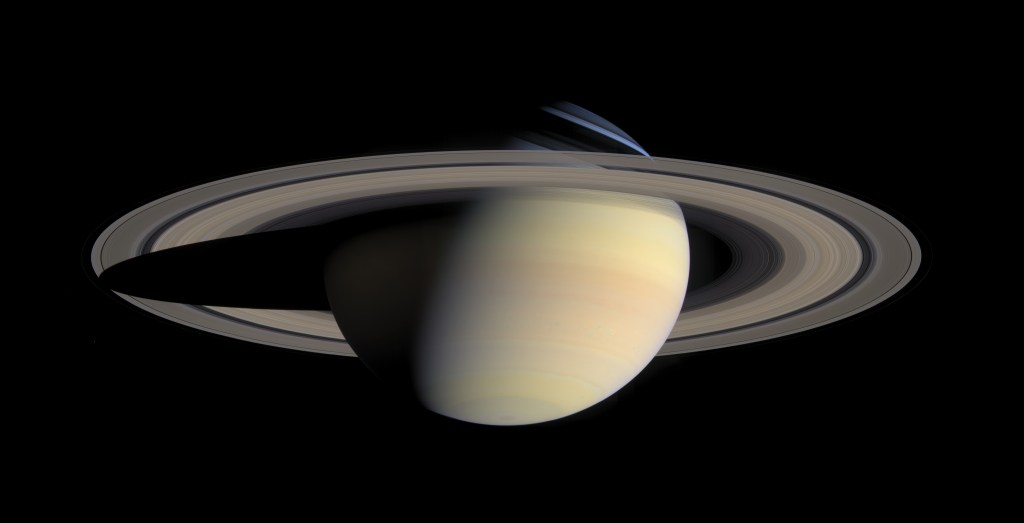
On Wikipedia, it is written that the history of the telescope can be traced to before the invention of the earliest known telescope, which appeared in 1608 in the Netherlands, just like my history can be traced to before my birth. I like the telescope which, to me, seems like a bridge between centuries. Last night, I looked at the Saturn through a low-resolution telescope. It took me some time to understand: the large planet of Saturn appeared like a tiny orange dot with rings around it. At first, I felt a bit disappointed but just a few moments later I couldn’t believe that it happened, that I saw the planet of Saturn with my own eyes through an eyepiece lens. After some time, I went to see it the second time. All day today, the orange dot keeps returning to me in flashes and I keep thinking: I saw the planet of Saturn.
I would not want to live 2000 years later where it might be commonplace to travel to distant planets. I would like to die in a forest somewhere looking through a telescope. And someone, thousands of years later, will find bones of an ancient woman not knowing that she died looking at rings of Saturn.


One response to “The Rings of Saturn”
[…] Saudamini Deo, The Rings of Saturn […]